Avenue of Sphinxes
The Avenue of Sphinxes is an ancient processional road of about 2.7 km joining Karnak and Luxor Temple. After decades of excavation it reopened in November 2021; stretches are visible free from the street, and the sections inside the temples are covered by their tickets.
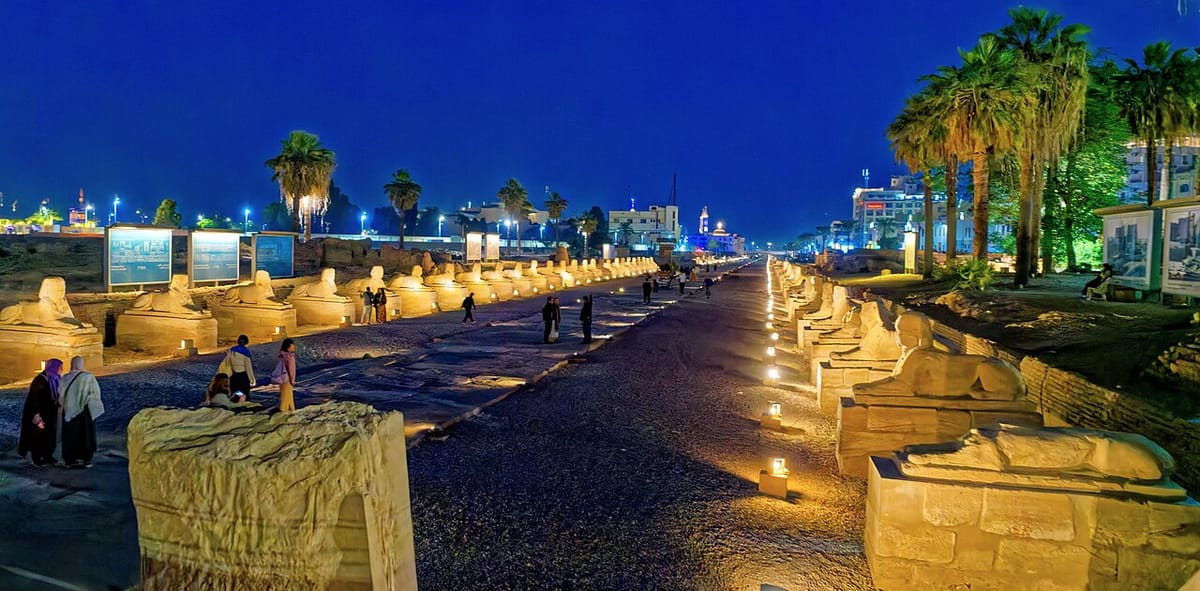
A sacred road roughly 2.7 kilometres long once linked the temples of Karnak and Luxor, with sphinxes lined up along both sides. Most of the ones standing today were placed there under the pharaoh Nectanebo I in the 4th century BC.
Every year at the Opet festival, priests carried the gods' statues along this route from one temple to the other. Over the following centuries the town spread over it and the avenue vanished from view.
Decades of excavation brought it back, and it reopened in November 2021 with a grand night-time parade. Long stretches of sphinxes are now visible, and you can walk parts of the route.
What to see
- The rows of sphinxes at the Luxor Temple end
- The ram-headed sphinxes near Karnak
- Evening light and floodlighting
Visiting
- Opening hours: visible from the street at all times; walkable sections open at set times
- Tickets: the sections inside Luxor Temple and Karnak are included in those tickets
- Best time: sunset and after dark
- Nearby: Luxor Temple, Karnak, Luxor Museum
Getting there
Coordinates: 25.7078, 32.6483
Frequently asked questions
Do you need a ticket for the Avenue of Sphinxes?
You can see stretches of it from the street at any time for free. The sections inside Luxor Temple and Karnak are covered by those temples' tickets, and other walkable sections open at set times.
How long is the Avenue of Sphinxes?
About 2.7 km, running between Karnak and Luxor Temple.
When is the best time to see the Avenue of Sphinxes?
At sunset and after dark, when it is floodlit. The best view is from the end of Luxor Temple's courtyard, looking north.