Aga Khan Mausoleum
The Aga Khan Mausoleum sits on a hill on Aswan's West Bank and was built in 1959–1960 for Aga Khan III. It has been closed to visitors since 1997, so you see it from outside, ideally from a felucca on the Nile.
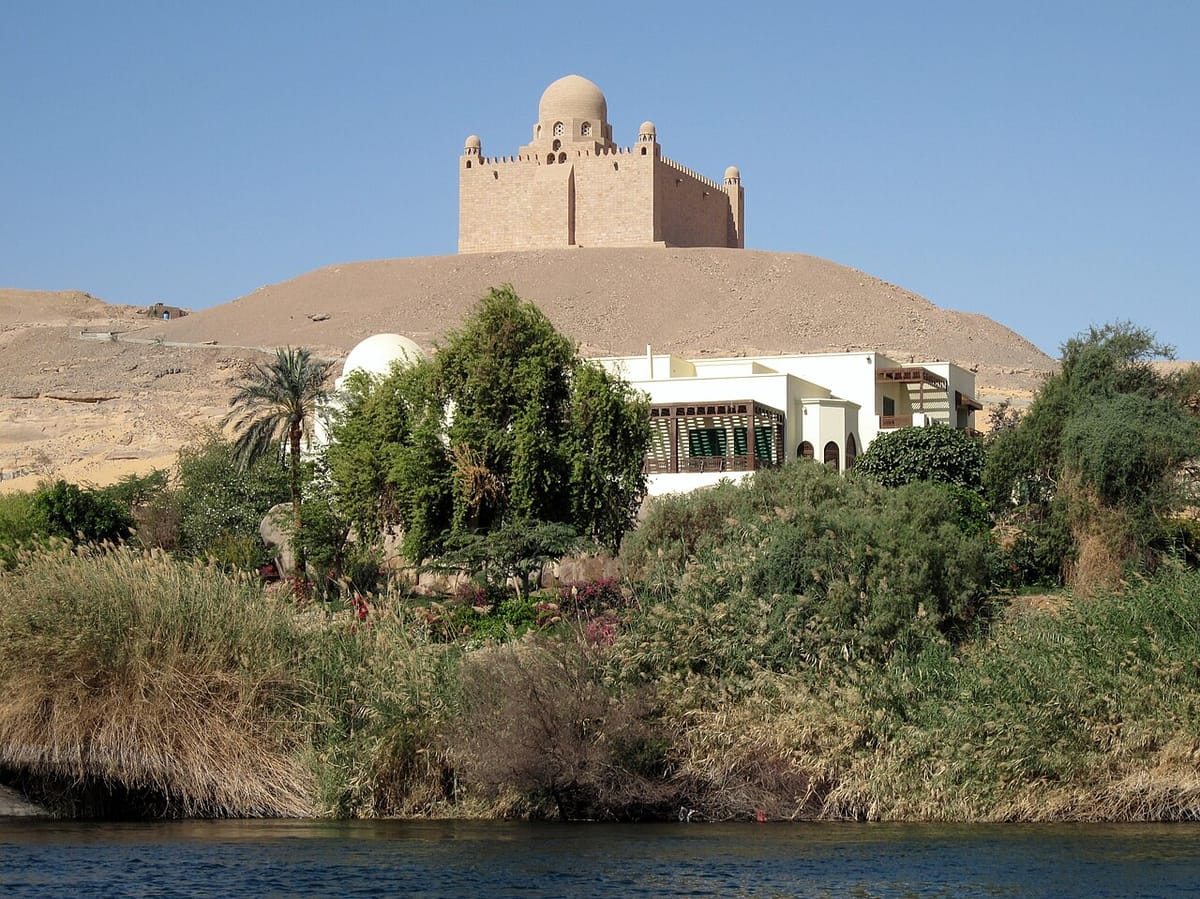
High on a desert ridge above the West Bank, a pale granite tomb modelled on Cairo's Fatimid mosques overlooks Aswan. It belongs to Aga Khan III, spiritual leader of the Ismaili Muslims, who came to Aswan every winter and died in 1957.
His widow, the Begum Om Habibeh, commissioned the mausoleum in 1959–1960, and for many years she laid a fresh red rose on his tomb each day.
The building has been closed to the public since 1997. Even so, it is one of the defining sights of Aswan, and every felucca trip sails close beneath it.
What to see
- The Fatimid-style dome on the hilltop
- The view from a felucca on the Nile
- The nearby Monastery of St Simeon, reached on foot or by camel
Visiting
- Access: the mausoleum is closed; view it from the river or the West Bank
- Getting there: by felucca or motorboat from the Corniche
- Nearby: Qubbat al-Hawa, Aswan Botanical Garden, Aswan Corniche
Getting there
Coordinates: 24.0883, 32.8789
Frequently asked questions
Can you go inside the Aga Khan Mausoleum?
No. It has been closed to visitors since 1997. You can see it from the river or from the West Bank.
What is the best way to see the Aga Khan Mausoleum?
From a felucca or motorboat leaving the Corniche. A sunset sail around Elephantine and Kitchener's Island passes directly below the hill.
Who is buried in the Aga Khan Mausoleum?
Aga Khan III, spiritual leader of the Ismaili Muslims, who wintered in Aswan and died in 1957. His widow, the Begum Om Habibeh, had the tomb built.