Aswan Souk
Aswan's souk runs along Sharia al-Souk, one street back from the Corniche. Entry is free, most stalls trade from late morning until late at night, and it is at its best in the evening once the heat has gone.
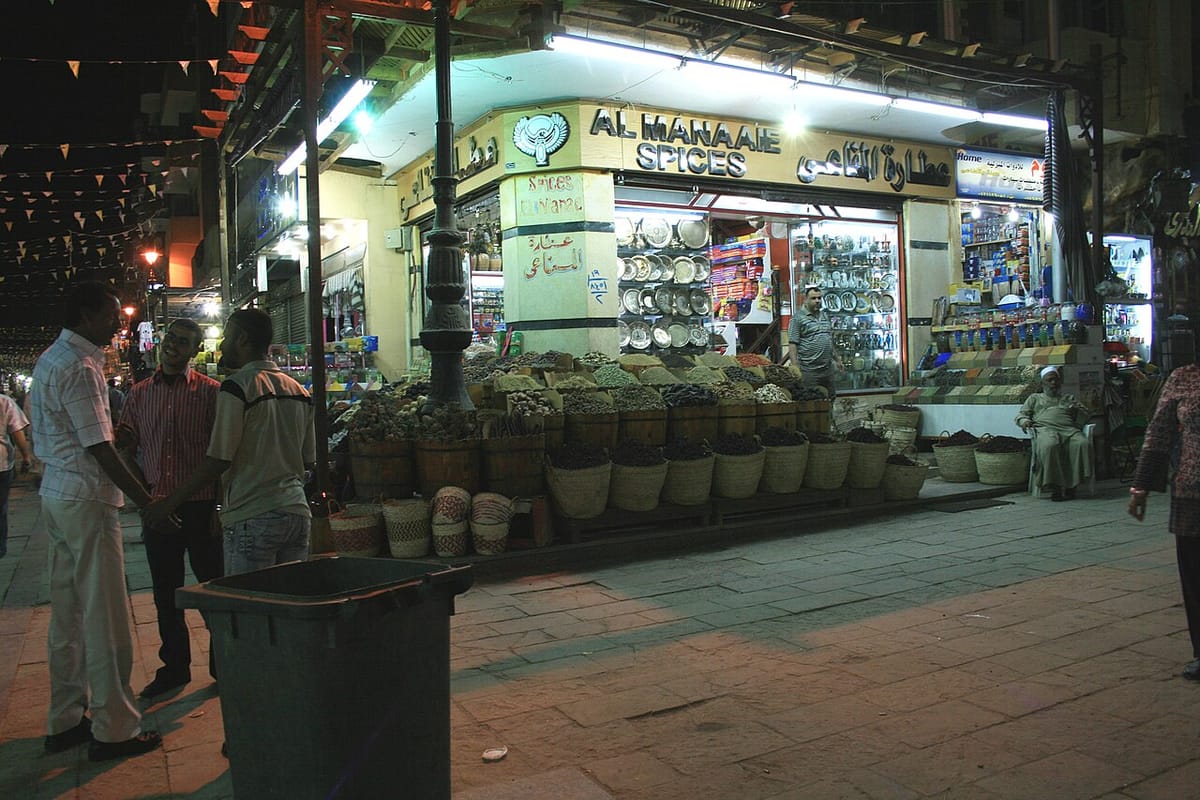
The Aswan souk stretches along Sharia al-Souk, a street that runs parallel to the Corniche one block inland, heading south from near the railway station. It is calmer than Khan el-Khalili in Cairo, and residents still shop here alongside visitors.
Expect heaps of spices, dried karkade (hibiscus) for the ruby-red tea drunk all over Egypt, henna, incense, Nubian baskets, woven scarves and galabiyas. Stalls selling fruit, vegetables and bread are mixed in with the souvenir shops.
Evening is the time to come, when the day's heat has eased and the street fills up.
What to see
- Spices, karkade and dried fruit
- Nubian baskets and handicrafts
- The evening buzz and street food
Visiting
- Opening hours: most stalls from late morning until late at night
- Haggling: expected, though prices are lower and the pace gentler than in Cairo
- Getting there: on foot from the Corniche or the railway station
- Nearby: Aswan Corniche, Nubia Museum
Getting there
Coordinates: 24.092, 32.8983
Frequently asked questions
What should I buy in the Aswan souk?
Spices, dried karkade (hibiscus) for red tea, henna, incense, Nubian baskets, woven scarves and galabiyas. Karkade and Aswan dates are light and easy to pack.
Do you have to haggle in Aswan souk?
Haggling is expected, but prices are lower and the pace is gentler than in Cairo.
What time does the Aswan souk open?
Most stalls open from late morning until late at night. It is liveliest in the evening.